Sweet cravings rarely arrive at a convenient time. They show up at nine in the evening, or straight after a workout. More of us now want something that satisfies the craving and brings a bit of protein along too.
That is why high protein desserts have become such a popular search. People want a treat that feels like a treat, but also keeps them comfortably full and fits around training, work and family life. The good news is that you do not need a special tub of powder or a complicated recipe to get there.
Below you will find a short guide to protein basics, then eight easy recipes made from everyday ingredients. Each one takes under 15 minutes of hands-on time, apart from the baked ones. There is a summary table, plenty of swaps, and a few notes on who should check with a professional first.
Why Protein in Dessert Is So Popular
Searches for high-protein sweets have been climbing, and there are sensible reasons behind it.
Protein tends to be more filling than the same amount of sugar or refined carbohydrate. A dessert built on yogurt, eggs or oats will usually keep you satisfied for longer than a biscuit on its own. Protein also supplies the amino acids your muscles use to repair themselves, which is why many active people like to include some after exercise.
Let's keep this in proportion, though. A dessert is still a dessert. These recipes are a pleasant way to add some nutrients to something sweet, not a health food that cancels out everything else on your plate.
Protein Basics: How Much Do You Need?
For most healthy adults, the commonly used recommended intake is about 0.8 grams of protein per kilogram of body weight per day. So a person weighing 70 kg would aim for roughly 56 g. That figure is a minimum for general health, not a ceiling.
People who train regularly, especially with weights, often do better with more. Sports nutrition guidance commonly suggests 1.2 to 2.0 g per kg for active adults, and older adults may also benefit from a little more.
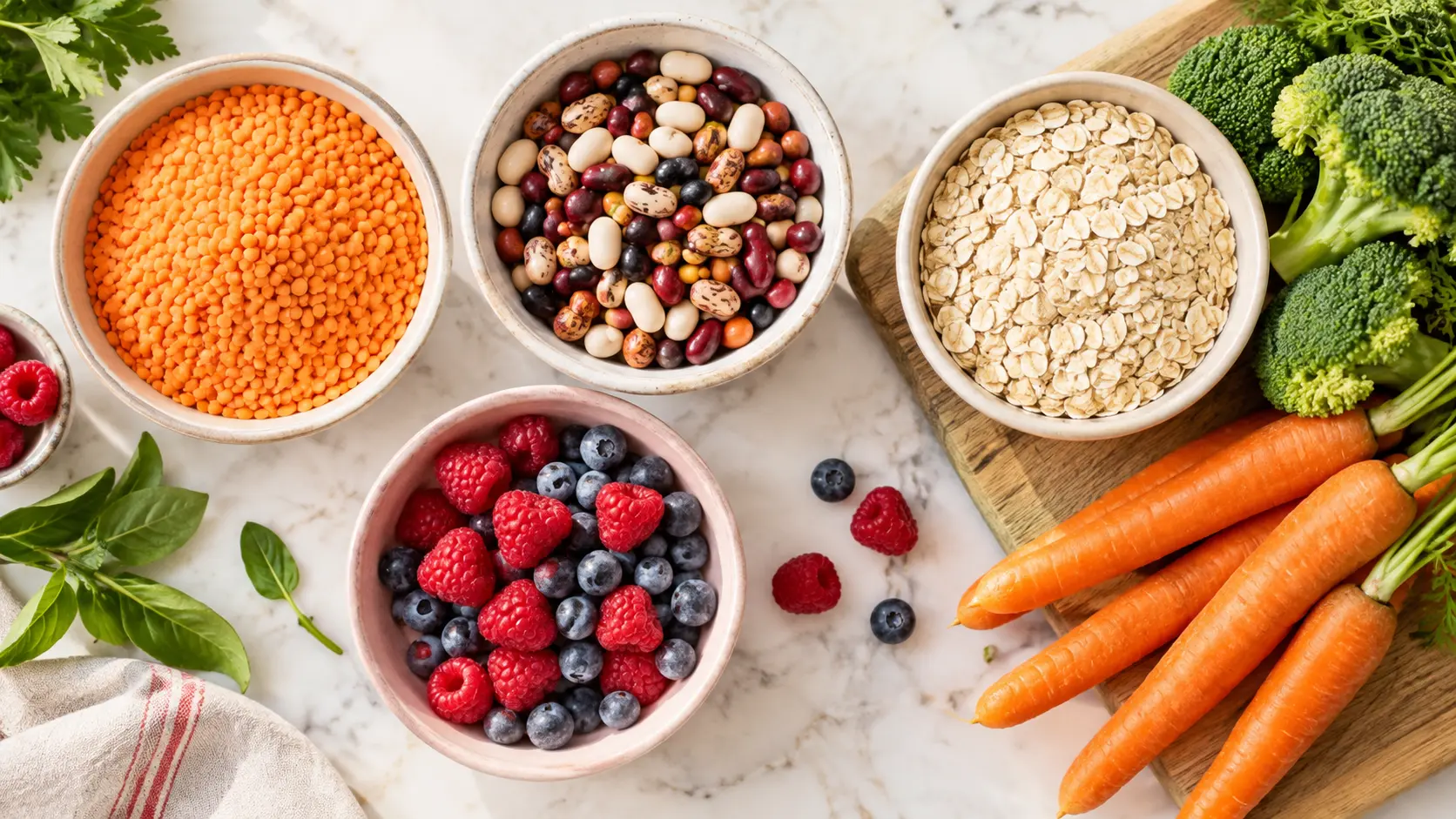
Food comes first: eggs, dairy, beans, lentils, fish, poultry, tofu and nuts all contribute. Dessert is a bonus, not the foundation, and very high intakes bring no extra benefit for most people.
If you are starting to build muscle, our guide to strength training at home for beginners explains how protein and resistance work together, and why a modest, steady approach beats extremes.
A Quick Note on the Numbers
Every protein figure below is approximate. Brands differ a lot. Greek yogurt, cottage cheese, plant milks and protein powders all vary. Use these numbers as a rough guide, and check the labels if you need to be precise.
8 Easy High Protein Desserts
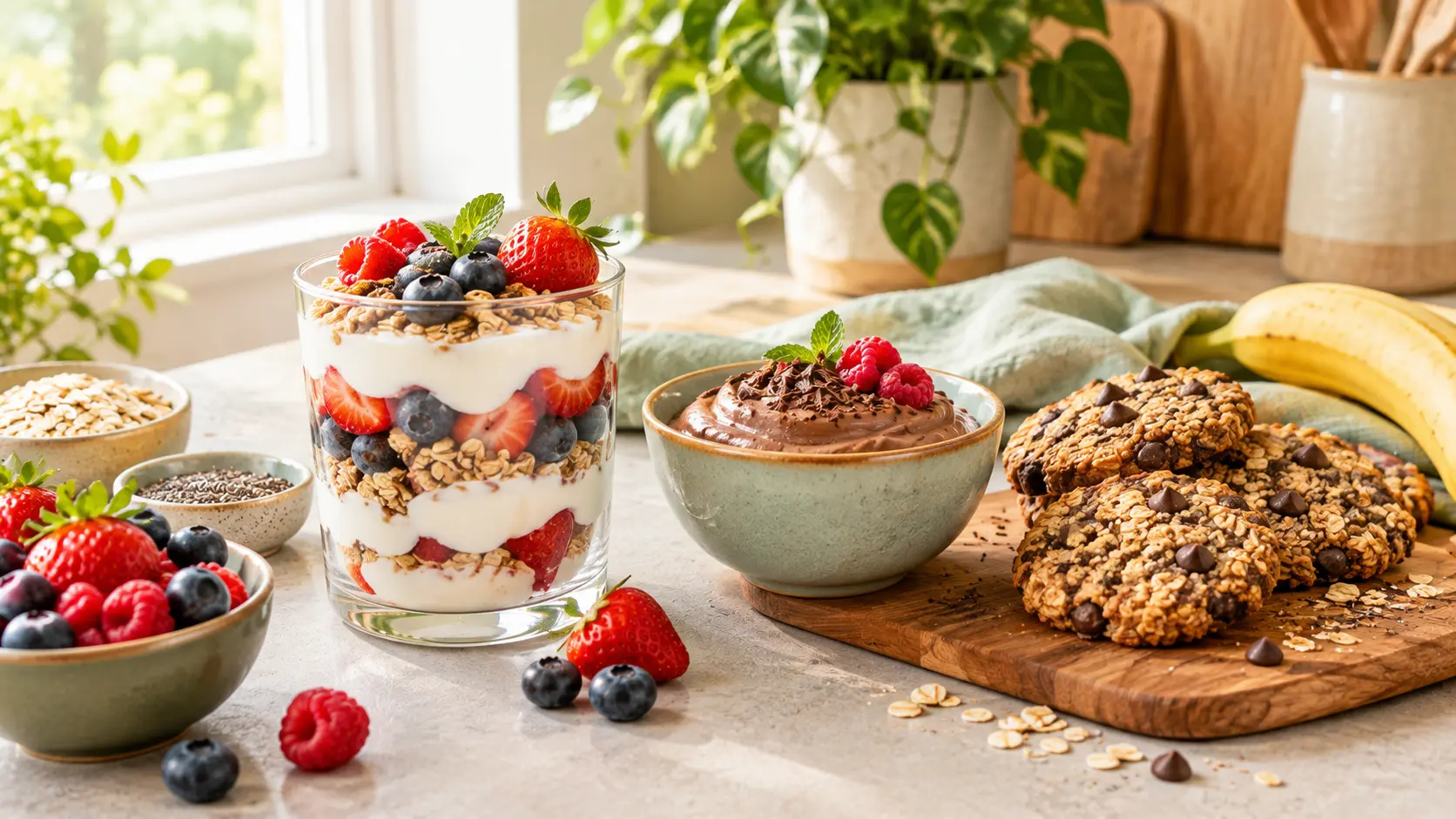
1. Greek Yogurt Berry Parfait
Approx. protein: 18 to 22 g per serving. Prep: 5 minutes.
You will need 200 g thick Greek yogurt (or similar strained yogurt), a handful of fresh or frozen berries, 2 tablespoons of oats or granola, and a drizzle of honey if you like.
1. Spoon half the yogurt into a glass or bowl.
2. Add half the berries and a spoonful of oats.
3. Repeat the layers and finish with a little honey.
Chopped nuts or seeds add crunch and a little extra protein.
2. Chocolate Cottage Cheese Mousse
Approx. protein: 13 to 15 g per serving (makes 2). Prep: 5 minutes.
You will need 250 g cottage cheese, 2 tablespoons of unsweetened cocoa powder, 1 to 2 tablespoons of honey or maple syrup, a splash of milk, and a pinch of salt.
1. Blend everything until completely smooth. A food processor or stick blender works best.
2. Taste and adjust the sweetness.
3. Chill for 20 minutes if you can wait, then top with a few raspberries or shaved dark chocolate.
Blended well, cottage cheese turns creamy and mild, and the cocoa does the talking.
3. Protein Mug Cake
Approx. protein: 10 to 12 g (about 20 to 25 g with a scoop of protein powder). Prep: 5 minutes, plus 90 seconds in the microwave.
You will need 1 egg, 3 tablespoons of oat flour, 1 tablespoon of cocoa, 2 tablespoons of milk, 1 tablespoon of sugar or honey, and half a teaspoon of baking powder. Add a scoop of protein powder and a splash more milk if you use it.
1. Whisk everything together in a large mug.
2. Microwave for 60 to 90 seconds, until just set.
3. Let it cool for a minute before eating.
Overcooking makes it rubbery, so start with less time.
4. Banana Oat Cookies
Approx. protein: 4 to 6 g per two cookies. Prep: 10 minutes, plus about 12 minutes baking.
You will need 2 ripe bananas, 100 g rolled oats, 2 tablespoons of peanut butter, and a handful of dark chocolate chips or raisins.
1. Heat the oven to 180°C (350°F) and line a tray.
2. Mash the bananas, then stir in the oats, peanut butter and chocolate.
3. Spoon about 8 mounds onto the tray and flatten slightly.
4. Bake for 12 minutes until golden at the edges.
These are modest on protein, so pair them with a glass of milk.
5. Chia Pudding
Approx. protein: 10 to 16 g per serving. Prep: 5 minutes, plus overnight soaking.
You will need 3 tablespoons of chia seeds, 200 ml milk (dairy or soy for the most protein), 1 teaspoon of honey or maple syrup, and a little vanilla. For extra protein, top with a few spoonfuls of Greek yogurt.
1. Stir the chia, milk, sweetener and vanilla in a jar.
2. Wait five minutes, stir again to stop clumps, and refrigerate overnight or for at least 2 hours.
3. Top with fruit and yogurt in the morning.
6. Frozen Yogurt Bark
Approx. protein: 8 to 10 g per two pieces. Prep: 10 minutes, plus freezing time.
You will need 300 g Greek yogurt, 1 tablespoon of honey, a handful of berries, and 30 g of dark chocolate, chopped.
1. Line a tray with baking paper.
2. Stir the honey into the yogurt and spread it about 1 cm thick.
3. Scatter the berries and chocolate over the top.
4. Freeze for 2 to 3 hours, then break into pieces.
Keep the pieces in a container in the freezer.
7. Baked Oat Cups
Approx. protein: 12 to 14 g per two cups. Prep: 10 minutes, plus 20 minutes baking.
You will need 150 g rolled oats, 2 eggs, 1 mashed ripe banana, 250 ml milk, 1 teaspoon of baking powder, a teaspoon of cinnamon, and a handful of berries or chocolate chips.
1. Heat the oven to 180°C (350°F) and grease a six-hole muffin tin.
2. Mix everything together and divide between the holes.
3. Bake for about 20 minutes until set and lightly golden.
8. Peanut Butter Protein Bites
Approx. protein: 6 to 8 g per two bites (a little more with protein powder). Prep: 10 minutes, plus chilling.
You will need 100 g rolled oats, 4 tablespoons of peanut butter, 2 tablespoons of honey, 2 tablespoons of cocoa or a scoop of protein powder, and a splash of milk if the mix is dry.
1. Stir everything together until it holds when squeezed.
2. Roll into about 12 small balls.
3. Chill for 30 minutes to firm up.
They keep well in the fridge.
Summary Table
Dessert | Approx. protein per serving | Active prep | Baked? |
Greek yogurt berry parfait | 18 to 22 g | 5 min | No |
Chocolate cottage cheese mousse | 13 to 15 g | 5 min | No |
Protein mug cake | 10 to 12 g (20 to 25 g with powder) | 5 min | Microwave |
Banana oat cookies | 4 to 6 g (two cookies) | 10 min | Yes |
Chia pudding | 10 to 16 g | 5 min | No |
Frozen yogurt bark | 8 to 10 g (two pieces) | 10 min | No |
Baked oat cups | 12 to 14 g (two cups) | 10 min | Yes |
Peanut butter protein bites | 6 to 8 g (two bites) | 10 min | No |
All values are approximate and depend on your brands and exact quantities. Check labels.
Tips for Making Them Work for You
Swapping dairy for plant options
You can make most of these without dairy. Soy yogurt and soy milk are the closest plant options for protein, while coconut and almond versions are usually much lower. Check the label, as plant products vary widely.
Allergies and intolerances
Peanut butter and eggs are common allergens. Swap peanut butter for sunflower seed butter, and use a mashed banana or a spoonful of yogurt in place of eggs where the recipe allows, remembering that protein will drop.
Storing and batch prepping
Parfaits and mousse keep for about two days in the fridge. Baked oat cups last around three to four days in the fridge, and bites a little longer. Bark and cookies freeze well. If you like to cook ahead, a weekly reset day is a perfect time to bake a tray of oat cups and roll a batch of bites for the week.
Portion sizes
Nut butter, honey and chocolate are calorie-dense, so a spoonful goes a long way. Measure once, then trust your eye.
A walk, then a treat
If you enjoy pairing habits, try a half-hour of Japanese interval walking followed by a chilled mousse or a yogurt parfait.
Who Should Check With a Professional First?
Most healthy adults can enjoy these recipes without worry. A few groups should get personal advice first:
- People with kidney disease. Higher protein intakes can be inappropriate, so your doctor or renal dietitian should set your target.
- Anyone with food allergies. Check every ingredient and label, including protein powders, which can contain milk, soy or traces of nuts.
- People on special diets. If you manage diabetes, follow a medically supervised diet, are pregnant, or have a history of disordered eating, speak to a doctor or registered dietitian before changing how you eat.
None of these recipes is meant for weight loss, and none will do that on its own. They are simply a nicer way to enjoy something sweet.
Frequently Asked Questions
Can a dessert really be high in protein?
Yes, when it is built on ingredients like Greek yogurt, cottage cheese, eggs or milk. A parfait made with 200 g of Greek yogurt can offer close to 20 g. Baked goods based mainly on oats and fruit are usually lower.
Do I need protein powder?
No. Every recipe here works without it. Powder is an optional extra for the mug cake and bites if you already use it and like the convenience.
How much protein should I eat after a workout?
Many sports nutrition guidelines suggest roughly 20 to 30 g of protein in the hours after exercise, though total daily protein matters more than exact timing. A yogurt parfait or a glass of milk with two cookies is a perfectly reasonable choice.
Can I make them vegan?
Mostly. Use soy yogurt and milk, and check labels, as protein will often be lower.
The Bottom Line
High protein desserts are not magic, but they are a pleasant, practical way to make a sweet moment a little more nourishing. Start with the recipe that suits your week best: the parfait when you are in a rush, the oat cups when you have a quiet hour, the bark when the weather is warm.
Keep portions sensible and read your labels. Protein from a varied diet matters more than any single dessert.
This article provides general information only and is not medical advice. If you have a health condition, allergy or dietary requirement, please speak to your doctor or a registered dietitian before changing your diet.